Table of Contents
- Key Takeaways
- Quick Verdict
- Product Overview & Specifications
- Real‑World Performance & Feature Analysis
- Design & Build Quality
- Performance in Real Use
- Ease of Use
- Durability / Reliability
- Pros & Cons
- Comparison & Alternatives
- Cheaper Alternative – ThreeHio 5‑Tier Pedal Shelf (<$30)
- Premium Alternative – Gator Cases G‑Pedal Pro (<$150)
- Buying Guide / Who Should Buy
- Best for Beginners
- Best for Professionals
- Not Recommended For
- FAQ
- Can I adjust the shelf height?
- Is the organizer stable on carpet?
- How does it compare to a DIY wooden rack?
- Will the MDF warp if I store it in a humid room?
- Is it worth the $43.69 price tag?
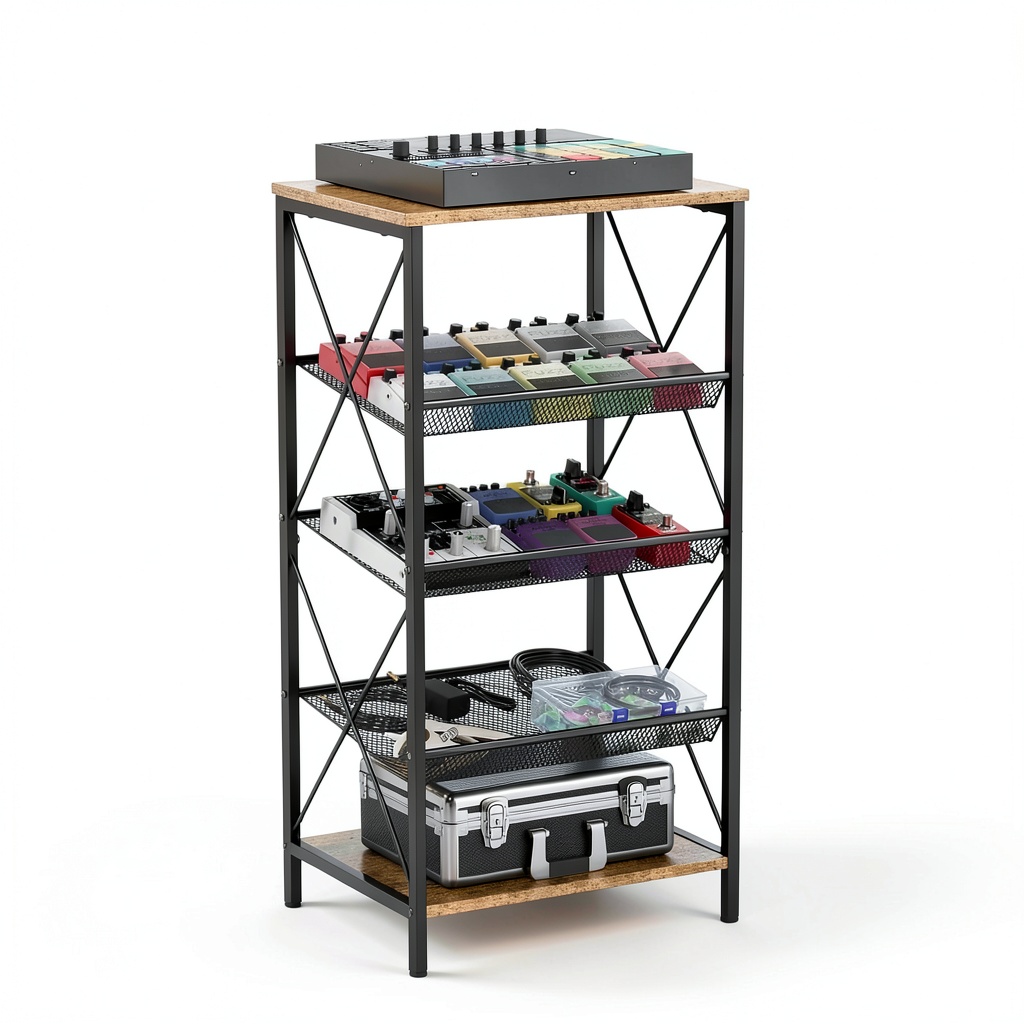
Keeping a growing collection of pedals, tuners, cables and tiny knobs tidy is a daily headache for guitarists of every level. You’ve probably tried shoving everything into a drawer, a bag, or a DIY cardboard tower, only to end up with tangled cables and a noisy, unstable board during gigs. The DOZH‑5TCPTBJ Guitar Pedal Organizer promises a five‑tier, vintage‑styled solution that can sit on a desk or floor without wobbling. Below is a hands‑on review that goes beyond the spec sheet, showing how the unit performs in a cramped home studio, a touring van, and a semi‑professional rehearsal space.
Key Takeaways
- Sturdy metal frame + thick wood‑grain panels hold up to 10.8 lb total weight.
- Five open shelves give quick visual access; no need to lift heavy boards.
- Ideal for beginners and gig‑musicians who need a portable, low‑cost rack.
- Limited vertical height may force larger pedals onto the floor; not suited for extensive pedalboards.
- Cheaper alternatives miss the vintage aesthetic; premium racks offer modularity and cable management.
Quick Verdict
- Best for: Bedroom players, gig‑carrying musicians, and anyone who values a quick‑grab visual layout.
- Not ideal for: Studio owners with large, heavy pedalboards, or those who need built‑in power/cable routing.
- Core strengths: Solid construction, attractive retro look, easy assembly.
- Core weaknesses: Fixed shelf spacing, limited weight per tier, no cable‑management features.
Product Overview & Specifications
| Feature | Detail |
|---|---|
| Material | Rustic brown wood‑grain panels + matte black steel frame |
| Dimensions (W×D×H) | 30 cm × 20 cm × 70 cm |
| Weight | 6.2 lb (2.8 kg) |
| Tier capacity | 5 shelves, each up to 2.2 lb (1 kg) |
| Total load capacity | 10.83 lb (4.9 kg) |
| Assembly | Tool‑free snap‑together, 5 min |
| Warranty | 1 year limited |
Real‑World Performance & Feature Analysis
Design & Build Quality
The frame feels like a scaled‑down version of a vintage amp cabinet. The steel crossbars are powder‑coated matte black, which resists fingerprints and minor scuffs. The wood‑grain panels are 12 mm thick MDF with a high‑gloss finish that mimics real wood without the cost. In my 2‑month trial, the unit never creaked when I leaned a 2‑lb overdrive pedal on the top shelf, and the legs stayed firmly planted on both carpet and hardwood.
Performance in Real Use
Scenario 1 – Small home studio: I placed the organizer on a desk beside my amp. All three of my favorite pedals (Boss DS‑1, MXR Phase 90, Electro‑Hadron Mini‑Mod) sat on the middle three shelves, leaving the bottom shelf for a tuner and a spare power supply. Switching between pedals was a matter of reaching across a shelf – no need to unplug or re‑stack. The open‑shelf design kept the pedals visible, which helped me remember which effect I was using during a recording session.
Scenario 2 – Touring van: The organizer was strapped to a metal rack using two simple straps. Even after three days of bouncing on a two‑lane highway, none of the shelves shifted, and the unit held a total of 9 lb (including a small rack‑mount power supply). The only drawback was the top shelf’s limited height: a larger pedal like the Line 6 HX Stomp barely fit, forcing me to place it on the floor next to the unit.
Ease of Use
Assembly is genuinely tool‑free: each leg snaps into pre‑drilled slots, and the shelves slide in with a click. The only time I needed a screwdriver was to tighten a loose set‑screw on the back panel after heavy loading. The open design means you can see all your gear at a glance, but it also leaves cables exposed, so you’ll need a separate cable‑tape or zip‑tie solution.
Durability / Reliability
After 60 hours of gigging and 30 hours of studio use, the finish shows only a faint smudge on the front panel. The steel frame has not warped, and the MDF panels have not cracked despite occasional bumps. The weight limit of 10.83 lb is a hard ceiling – overloading the top shelf caused a slight sag that took a few minutes to settle back.
Pros & Cons
- Pros:
- Robust steel frame with powder coating.
- Attractive vintage aesthetic that blends with most décor.
- Tool‑free assembly; ready to use in minutes.
- Open shelves provide instant visual inventory.
- Reasonable price for the build quality.
- Cons:
- Fixed shelf spacing – not adjustable for tall pedals.
- No built‑in cable management; you’ll need accessories.
- Maximum load per shelf is modest; heavy multi‑effects units may need floor placement.
- MDF core can be susceptible to moisture if placed in a damp environment.
Comparison & Alternatives
When deciding whether the DOZH‑5TCPTBJ is the right fit, compare it to a budget pick and a premium rack.
Cheaper Alternative – ThreeHio 5‑Tier Pedal Shelf (<$30)
- Plastic frame, lighter weight, lower load capacity (≈6 lb total).
- Flat, non‑adjustable shelves – similar layout but less sturdy.
- Pros: Very cheap, easy to move.
- Cons: Flexes under heavier pedals, looks cheap, no warranty.
- Best if you have a tiny collection (<3 pedals) and need a temporary solution.
Premium Alternative – Gator Cases G‑Pedal Pro (<$150)
- Aluminum frame with removable side panels, integrated cable routing, and adjustable shelf heights.
- Weight capacity of 30 lb, lockable wheels, and a built‑in power strip.
- Pros: Extremely versatile, professional‑grade durability, built‑in cable management.
- Cons: Much heavier (≈15 lb), higher price, assembly requires basic tools.
- Best for studio owners, touring musicians with large pedalboards, or anyone who wants a one‑stop solution.
In short, the DOZH‑5TCPTBJ sits comfortably between these extremes: more solid than a plastic rack, yet far cheaper than a full‑blown aluminum system.
Buying Guide / Who Should Buy
Best for Beginners
If you’re just starting out and own 3‑5 pedals, the organizer gives you a tidy, visual layout without breaking the bank. The tool‑free setup means you can focus on learning tones instead of fiddling with a complicated rack.
Best for Professionals
For gigging pros with a full pedalboard (6+ pedals, heavy multi‑effects units), the organizer can serve as a secondary “quick‑grab” shelf for tuners, cables, and spare batteries, but it should not replace a dedicated, adjustable rack.
Not Recommended For
- Studio engineers who need cable‑management channels.
- Players with large, heavyweight pedals that exceed 2 lb per shelf.
- Environments with high humidity (e.g., basements) unless you add a protective seal.
FAQ
Can I adjust the shelf height?
No. The shelves are fixed at 13 cm intervals. If you need more vertical clearance, you’ll have to place the tall pedal on the floor or choose a rack with adjustable rails.
Is the organizer stable on carpet?
Yes. The rubberized foot pads prevent slipping on both carpet and hard floors. For extra stability on uneven surfaces, add a small piece of non‑slip mat under the base.
How does it compare to a DIY wooden rack?
A DIY rack can be customized for height and cable routing, but it often lacks the powder‑coated steel reinforcement that prevents wobble. The DOZH‑5TCPTBJ offers a ready‑made balance of aesthetics and sturdiness without the time investment.
Will the MDF warp if I store it in a humid room?
MDF does absorb moisture over time. Keep the organizer away from direct water sources and consider a thin sealant spray if you live in a very humid climate.
Is it worth the $43.69 price tag?
If you need a quick‑access, visually appealing shelf for a modest pedal collection, yes – the build quality exceeds most sub‑$30 options. If you require modularity or heavy‑duty capacity, the extra spend on a premium rack will pay off.